The DeKalb History Center, in cooperation with The Champion Newspaper, is hosting a new temporary exhibit highlighting 20 Years of Community Champions. As part of their 20 year anniversary, The Champion recognized newsmakers who have made positive contributions to DeKalb County during this time period. This exhibit details the important contributions from these Champions by highlighting their accomplishments and achievements and includes community leaders from all walks of life. The exhibit showcases personal items and memorabilia from many of the honorees.
The Bird burst upon the scene in the midst of national upheaval and chronicled turbulent times in Atlanta from 1968-1976. The country was polarized by the Vietnam War and struggles against discrimination at home. A growing “in-your-face” youth culture with strange clothes, hair, music, drugs and a wholesale rejection of middle-class values bewildered or angered many in the older generation. From the first issue, which castigated Atlanta icon Ralph McGill for his support of the war, there was never a doubt whose side The Bird was on. For over eight years it was the “voice of the voiceless” – African-Americans fighting Jim Crow in the South and institutionalized racism in the North; striking garbage and farm workers; Vietnamese peasants being slaughtered by American bombs and napalm; women taking control of their bodies; students demanding meaningful educations; and young people seeking new ways to live. At its height, with a circulation around 22,000, The Bird was the most widely-read weekly paper in Georgia. This original exhibit from The Bird creators is enhanced through artifacts and clothing from the time period.
Visit Rosebud again! Our exhibit focuses on the history of dairy farming in DeKalb County in the 20th century. The boll weevil’s attack on cotton farming led to the rise of dairy farms across DeKalb. The one-room exhibit contains colorful signs, artifacts such as a route book and milk bottles, and even includes a life-sized replica of Rosebud, the famous cow mascot for Mathis Dairy.
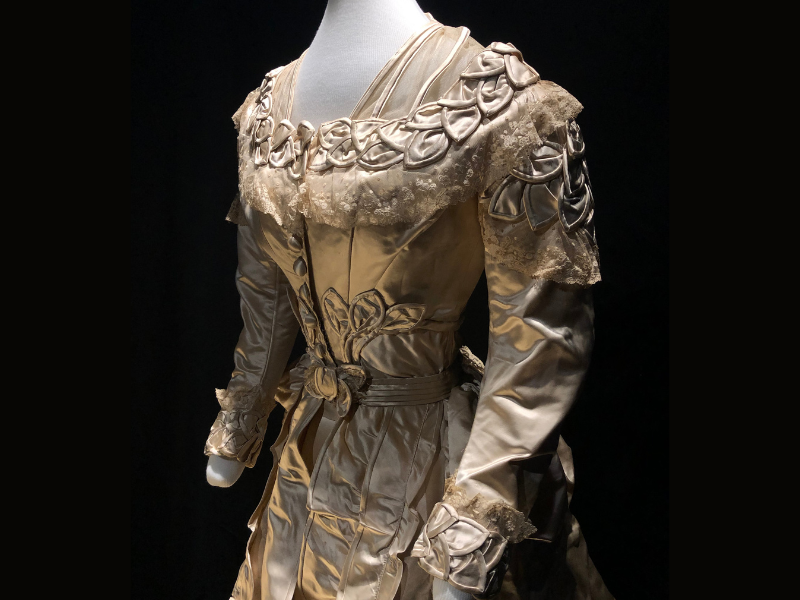
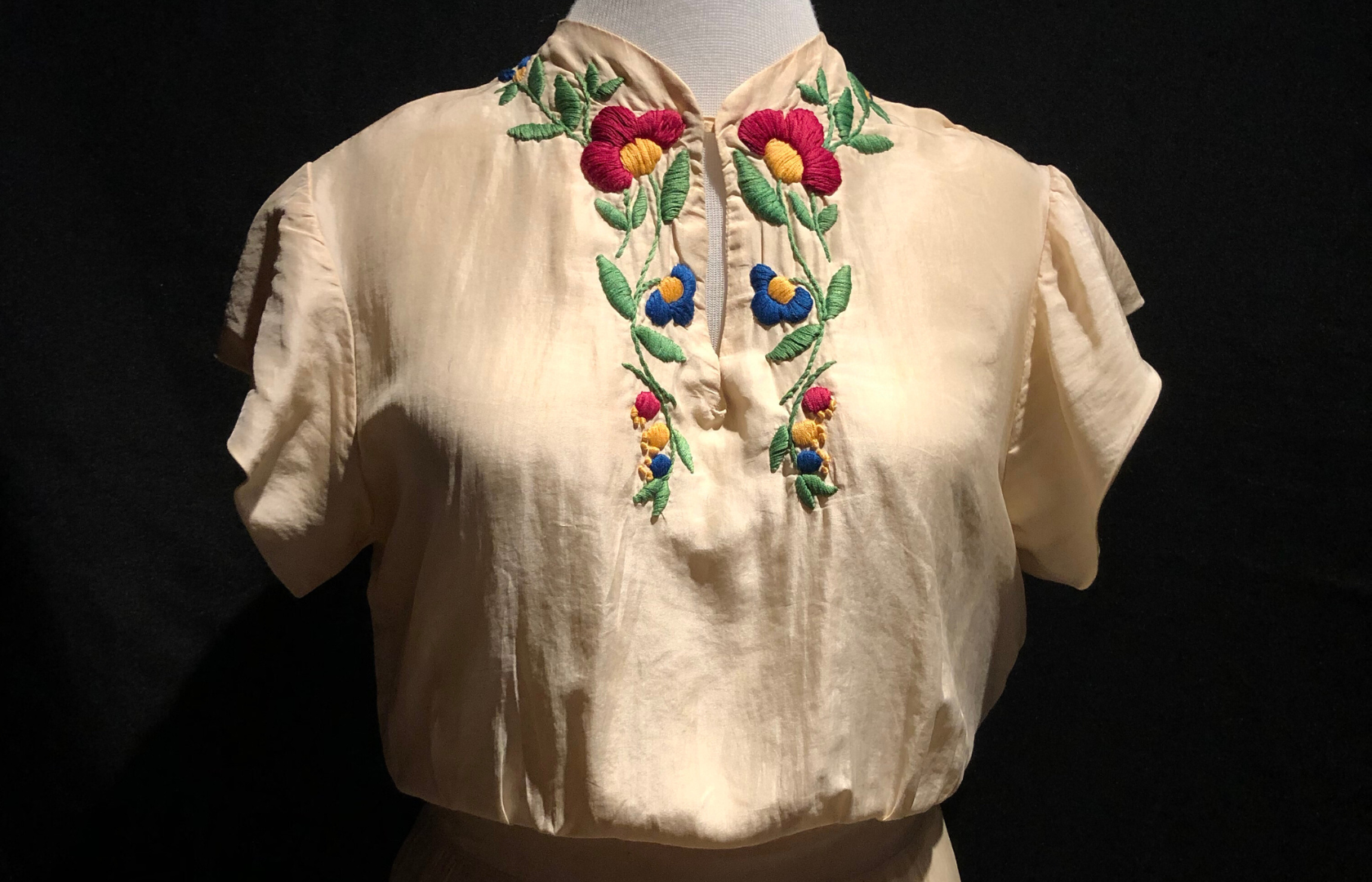
This exhibit provided a glimpse into the life of a prominent DeKalb County household from the 1920s to the 1940s. H. J. Carr founded a construction firm which built numerous local landmarks such as the Biltmore Hotel and the Crum and Forster building. H. J. and Bonnie Carr started their family in Druid Hills and later moved into the fieldstone house he constructed, now known as the Houston Mill House. Upon moving onto the Houston Mill property, he restored the historic mill to working condition. Highlights of the exhibit included evening wear from the 1920s and 30s, details about the youngest daughter’s wartime wedding and a case of period evening bags.
The Quilt Exhibit was organized by Sarah Phillips and Debbie Steinman and had a mixture of historic and contemporary quilts, including 8 which dated from 1850 to 1940. The colorful four-room exhibit showcased quilts with traditional patterns such as lone star, drunkard’s path, twisted bargello, square dance and crazy quilt, and many contemporary themes such as hearts, cats, The Lorax (from Dr. Seuss), stained glass, sunflowers and cupcakes. Locally themed quilts included a replica of one presented to the German Olympic Committee during the 1996 Olympics held in Atlanta, a quilt made for a child’s 5th grade graduation from Fernbank Elementary and a quilt made from Peachtree Road Race t-shirts and race bibs worn by the runners.
The Mt. Zion community is a small African-American enclave located on the northeast side of LaVista Road, and was settled in the 1800s. During the 20th century, the community changed from family farms to a suburban landscape which caused a large portion of the population to move away in the 1940s and 50s and then again in the 1980s and 90s. The community remained close-knit during these times of change and retains its cultural heritage today. The exhibit was based on the work of students from the Arbor Montessori School and supported by Commissioner Jeff Rader.

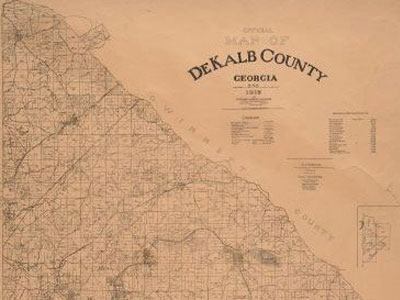
This exhibit featured a brief glimpse into our extensive map collection. The show featured high quality scans of many of our large maps ranging from 1900 – 1999. These full size reproductions represent the entire county and many cities and neighborhoods including Tucker, Brookhaven Estates, Druid Hills, Atlanta, Stone Mountain and Decatur. Original maps were also included. This exhibit ran from October 13, 2009 - January 15, 2010
The exhibit was supported in part by the Grassroots Arts Program of the Georgia Council for the Arts through the appropriations of the Georgia General Assembly.
Unbossed and Unbought, The Reverend Hosea L. Williams Exhibit Through materials on loan from Hosea Feed the Hungry and The Hosea Project, we profiled the life and work of this prominent Civil Rights leader. This exhibit ran from June 2nd thru September 25, 2009.